A field guide for understanding context and creating the conditions for collaboration in place-based systems.
Practical thoughts, resources and examples to help people navigate complexity, understand different perspectives and move towards collaborative change.
00
Before we begin
Exploring what needs to be understood before collaboration can happen: the people, places, systems and conditions that shape collective action.
01
Arriving with a question (not a solution)
Exploring why collaborative change begins with understanding context, recognising different forms of knowledge, and being willing to ask: “What might we be missing?”
02
Developing shared language and definitions
Exploring how words carry different meanings, why assumptions create misunderstanding, and how shared language creates the foundation for collaboration.
03
Finding better entry points into conversations
Exploring how to begin conversations from what already matters to people, rather than only from what matters most to us.
04
Recognising the meanings already in place
Learning to notice the stories, identities, histories and relationships that already exist within places and communities before attempting to change them.
05
Seeing what makes change possible
Exploring how behaviours emerge from wider systems, and how change becomes possible by understanding the conditions around it, rather than by good intentions alone.
06
Learning to see before you start
Practical activities to help you develop curiosity, observation and contextual understanding before considering what needs to happen next.
Pre-
Collaborative
City
00
Before we begin
Exploring what needs to be understood before collaboration can happen: the people, places, systems and conditions that shape collective action.
This section contains:
Why I'm writing this field guide
A rabbit-hole in three hops
Why this field guide focuses on cities
Who this field guide is for
One perspective among many
"When you can't see the angles no more, you in trouble, baby."
— Carlito Brigante in Carlito's Way (1993)
Why I'm writing this field guide
Another day, another bun fight.Herculean efforts to get disparate stakeholders into the same room, instantly dashed over a misunderstood term; a negligible difference of opinion; a significant difference in perspective; a lack of knowledge covered up with bluster; or separate starting points that, with time and understanding, might ultimately have converged.Over the last fifteen years or so in innovation, design and enterprise, I've covered a lot of ground. Over the past five years in particular, my work has taken me across sectors and scales, into climate action, public health, food systems, local government, economic transition and international policy. Sometimes I've led projects, sometimes I've facilitated conversations, sometimes I've carried out research, and sometimes I've simply sat quietly in the room.Naturally enough, people arrive with something to say: a position to put forward, a solution to defend, or a perspective they've worked hard to develop and want to make known.It makes sense; I've done it too. We're trained to become specialists and rewarded for knowing our subject, communicating it clearly and bringing our expertise into the room. Plus, our cultural bias towards extroversion can lead us to mistake speed and volume for confidence, and quietness and questions for uncertainty, even though the reality can be quite the opposite.

"Down with this sort of thing. Careful now." Fathers Ted and Dougal say enough's enough. Image: Channel 4 Entertainment
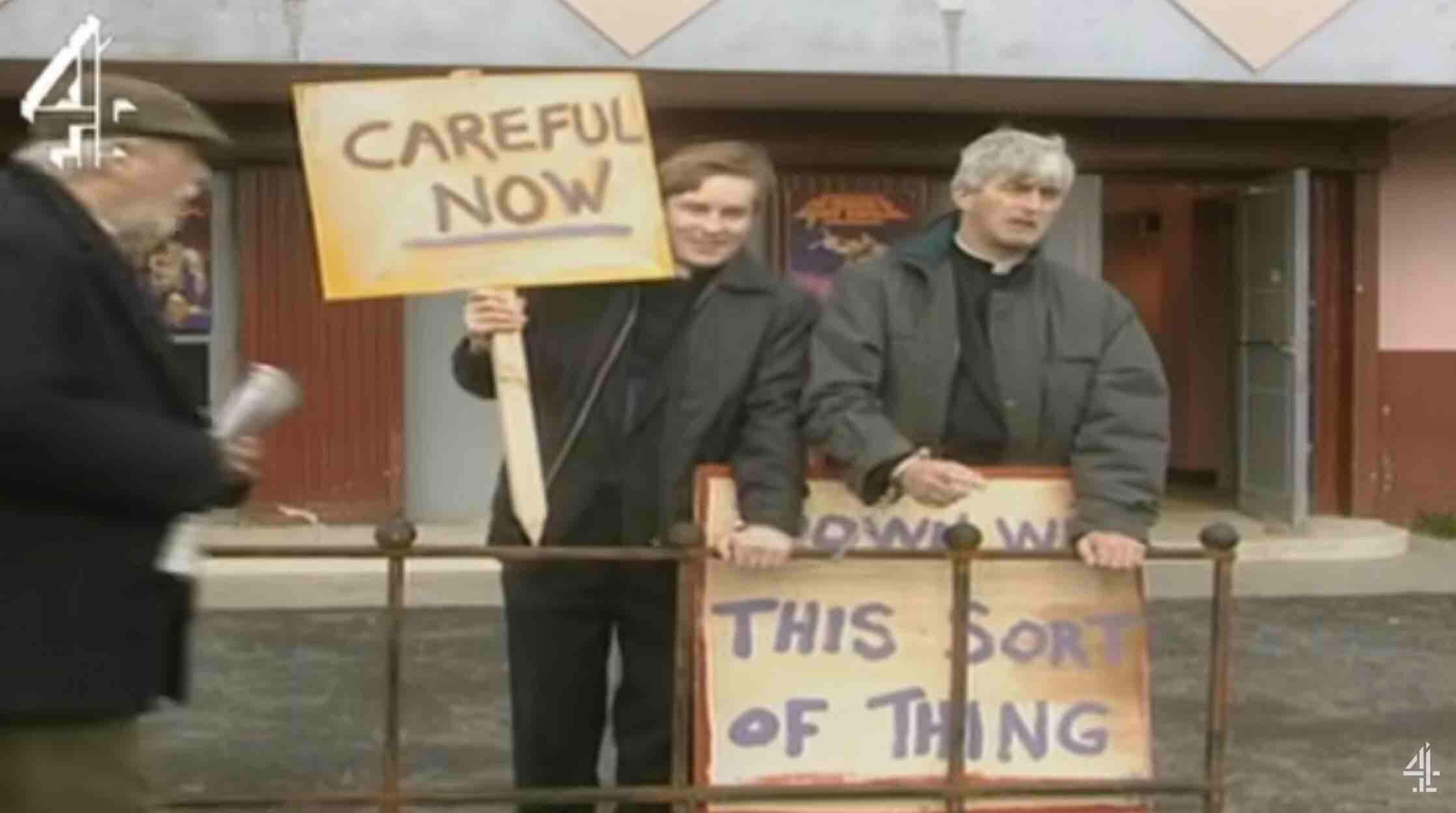
Ireland’s national treasure, Father Ted, nailed it: “Down with this sort of thing,” he said.There's no need to continually prove we know stuff. I know you know stuff, you know I know stuff. Now, we need to get comfortable with admitting what we don't know, and get curious about what other people might see that we can't.We don't struggle to address complex challenges because nobody has knowledge. We struggle because everybody has knowledge - but it's different knowledge.When all these voices are talking at the same time, it's difficult to see how the different pieces fit together: the competing perspectives, motivations, incentives and relationships, along with the potential risks and unintended consequences. And, crucially, the things we don't know - which can be just as important as what we do.So, stepping back a little to gain some perspective, the question that increasingly interested me wasn't "how do we get people in the room?" - there's already plenty of attention on that.The question became:How can we equip people to engage with different perspectives before they encounter them?
A rabbit-hole in three hops
The thing with 'going down rabbit-holes' is that everyone seems to think it's a bad thing. Sure, Alice in Wonderland may have spooked us all a bit.But we need to go down rabbit-holes if we want to develop a proper understanding.The systems-thinking skill is knowing how to find your way back, while staying curious about which other rabbit-holes might be worth exploring - and where they might unexpectedly connect, both above and below the surface.Approaching the sciences from the creative sector, I had a natural tendency to follow my interests wherever they led. It took me going back to university at the ripe old age of I'm not telling you to learn to define research questions, set parameters, dig deep, then come back up for air.My percolating question - How can we equip people to engage with different perspectives before they encounter them? - grew louder through my work exploring health communication and behaviour change. I was given a brief to look beyond the default perspective and see what opportunities might be being missed - and off I hopped.
1: Setting aside the default perspective
In the BBC Two comedy-drama Alma's Not Normal, aspiring actress Alma asks a shopkeeper to swap one cigarette packet for another “because she had that one recently”. It's a neat illustration of smokers' potential desensitisation to graphic health warnings: often gruesome images of the health impacts of smoking, from gangrenous feet to tongue cancer.These images are intended to shock, but they're also true. The anti-smoking message draws on fear, risk, loss, disease, premature ageing and death because the consequences of smoking are that serious. Public health communication should naturally highlight them.But WHO policy guidance also highlights the need to rotate warnings, innovate and explore other approaches in response to emerging signs of desensitisation. And so, I was asked to explore.A 'beyond-health' perspectiveIf I were a health professional, it stands to reason that I would see everything through a health lens. That's a necessary specialism. But coming to health from the creative industries, with a longstanding understanding of how psychology and branding intertwine, I know that smoking is not just a health matter, a habit or a chemical addiction; it's connected to something more. For more than a century, tobacco companies have invested enormous creative budgets in developing meaning around smoking, associating it with ideas like freedom, confidence, rebellion, belonging and desirability.Tobacco companies aren't just selling a product; they're selling a feeling. Whether status or stress relief, nostalgia or naughtiness, people can buy into that pre-packaged feeling, then find themselves locked in through the addiction that cigarettes are fundamentally designed to cause.Comparing 574 graphic health warnings from the WHO Pictorial Health Warnings Database against Schwartz's Circumplex of Universal Human Values suggested a potential over-emphasis on adverse health impacts, particularly when set against the tobacco industry's competing emotional and cultural messaging. It also revealed untapped opportunities to translate global health messages into more locally meaningful ones, shaped by the values of different countries and cultures.Some anti-tobacco organisations were already exploring this territory: Turkey's National Smoking Cessation Day, for example, integrates religious messaging, while Utah's Way To Quit campaign explores how Hispanic and Latin American communities can challenge tobacco-industry targeting and reclaim their cultural identity.But Reykjavík was the one that knocked me sideways.
2: Exploring a proven approach from a different perspective
In 1998, Icelandic teenagers were among Europe's heaviest users of alcohol and tobacco. By 2016, rates of substance use among 15- and 16-year-olds had fallen dramatically.The Icelandic Prevention Model, developed through the work of Professor Harvey Milkman, Dr Gudberg K. Jónsson and many Icelandic researchers, practitioners and communities, helped bring about a dramatic reduction in young people's use of cigarettes, alcohol and other drugs.What first compelled me to look more closely was the ingenuity of the approach - but I'll get to that. It was the photographs that really struck me.

Image: Dave Imms | Source: How Iceland cut rates of teen substance abuse with sports and family time - Positive News
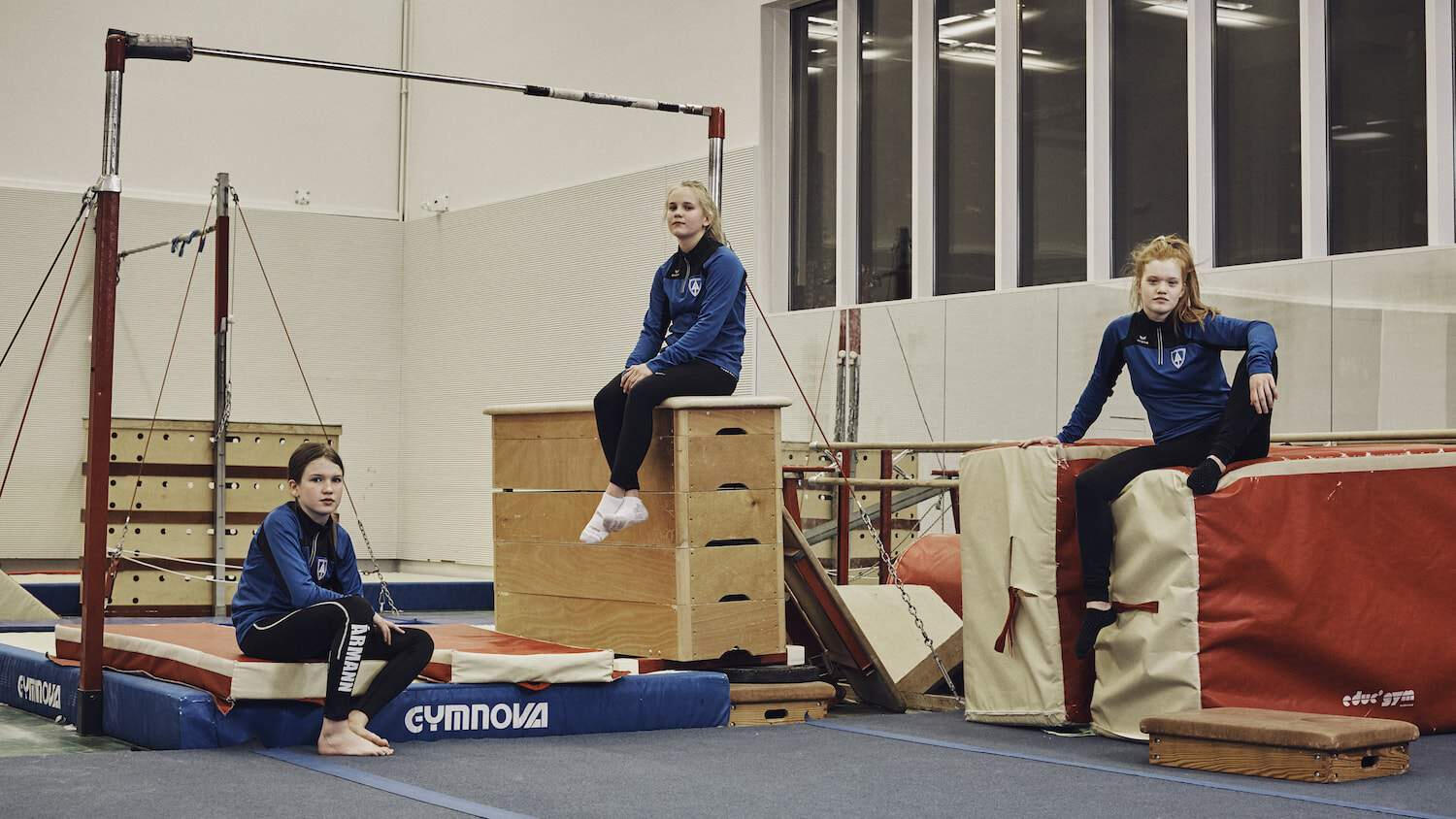
Look at those faces. These young people weren't being presented as passive recipients of health advice, or as cautionary tales about the dangers of smoking. They looked autonomous; self-assured. To me, there was a sense of defiance, too - as if they were determined to make their own decisions about who they were and what belonged in their lives, and rugby-tackle anyone who dared say otherwise.And that got me thinking about the values shining through.For more than a century, tobacco companies have invested enormous creative budgets in associating smoking with freedom, rebellion, excitement and belonging. Here, Iceland seemed to be playing them at their own game.But the Icelandic approach went further, asking a different question:What might young people be looking for that these substances were only too willing to provide?The answer wasn't simply more knowledge about health risks. It was excitement, adventure, stimulation, belonging.And so, Iceland invested in a broader set of opportunities and support for young people: organised sport, music, art and other community activities, alongside stronger connections between families, schools and local services. Funding helped make activities accessible to children from lower-income families, while parents were encouraged to spend more time with their children, stay involved in their lives and connect with other families.Rather than simply countering the industry-fuelled appeal of smoking, drinking and drugs, the approach sought to change the circumstances around young people: giving them opportunities to feel good, belong, build relationships and find support in their everyday lives.I found that genuinely exciting. It reinforced my sense that changing behaviour might start one big step back - involving less persuasion and more attention to what people need and want from life in the first place.But I wasn't quite finished.The more I looked into the model, the more I realised that this wasn't just a behaviour change intervention. It was also a striking example of place-based collaboration.Making this possible involved young people, parents, schools, youth workers, health professionals, policymakers, community organisations and many others working towards a shared goal.And that raised my next question.
3: The conditions before collaboration
I wondered whether the Icelandic Prevention Model had benefited from some important foundations already being in place.In conversation, I was told that Reykjavík is a relatively small capital city, where people from different backgrounds and professions are fairly likely to cross paths in everyday life. Politicians and plumbers might well hang out in the very same pub. People working in different sectors and occupying very different social positions might encounter one another in shops, pubs, community events, school PTAs and everyday life.It was a passing observation, but it stayed with me. I wondered whether that everyday connectedness offered some useful foundations for collaboration - no doubt still with some hard work, but it seemed the pathways were already partly carved.I thought about where I live, and about other UK cities where opportunities to mix can be more limited. I started wondering what happens when those pathways are weaker, for example:
Where there is no strong shared identity around place.
Where professional silos are deeply established.
Where people feel decisions have already been made without them.
Where different groups don't agree on what the problem is, let alone what should be done about it.
Where some forms of knowledge are taken more seriously than others.
Where organisations are competing for funding, recognition or influence.
Where policymakers rarely encounter the people experiencing the consequences of their decisions.
I could go on.The Icelandic model didn't give me a simple answer to these questions. But it helped me see - yes, that's right - another question I wanted to pursue.Before we can ask people to collaborate, what needs to happen for them to understand one another, and the situation they're trying to change?This is where the pre-collaborative idea began to take shape.Before we bring people together to design solutions, perhaps we need to develop the ability to understand context, recognise different forms of knowledge, and notice what might be missing.Collaboration isn't simply a matter of getting people into the same room. It depends on the conditions that allow them to understand one another, learn from difference and work towards meaningful change together.
And finally... coming up for air.
I started down this rabbit-hole looking at WHO graphic health warnings: what they communicate, what they might be missing, and how public health messages could become more meaningful to the people they're intended to reach.I came back with a much bigger question.The WHO research reminded me that behaviour doesn't happen in a vacuum. The Icelandic Prevention Model demonstrated another way to think about change: one that pays attention to people's wider circumstances and brings a community together around them.But it also left me wondering what happens when the conditions for that kind of collaboration aren't already in place.We often talk about collaboration as though it's the starting point: bring the right people into the room, get everyone around the table, co-create a solution.But what if that's already too far downstream?What if, before people can work together effectively, they need opportunities to understand the context, the different perspectives within it, and the things that might otherwise remain invisible?That's the question behind my emerging idea of the Pre-Collaborative City: exploring what needs to happen before collaboration so that people have a better chance of making meaningful change together. The space before the workshop, before the strategy, before the co-design session.The work of noticing, questioning, learning and making sense of a situation - not just from one professional or institutional perspective, but from the many perspectives that shape it.Perhaps some of our biggest challenges aren't simply problems of finding the right solution. They're problems of understanding what we're dealing with, whose knowledge matters, and what needs to be in place before we can begin to act together in a particular place.That's where this particular rabbit-hole begins... and this time you're coming with me.
Why this field guide focuses on cities
Despite its title, this is not really a field guide for cities.It is a field guide about people, systems and the places where they meet.Cities simply happen to be one of the clearest places to observe that relationship.They are where global challenges become local realities, where national policy becomes neighbourhood infrastructure, and where public services, businesses, communities and everyday life overlap. Decisions made at one scale become visible at another, often in ways that are surprisingly tangible.But focusing on cities also immerses us in life itself: people, nature, art, music, food, culture, architecture, design and history - and that rewards us with beauty and much-needed joy along the way.A city is a vibrant systems snapshot at an accessible scale.By learning to notice what happens there, we can better understand the relationships between different scales and apply those insights across many other places and contexts too.The city isn't the subject so much as the lens through which we learn to see the wider system.
Who this field guide is for
This field guide is for anyone working with complexity.If you have ever wondered why good ideas struggle to gain traction, why people interpret the same issue so differently, why engagement sometimes feels difficult, or why apparently simple solutions become complicated in practice, I hope you find something useful here.You might work in local government or urban development. You might be a student, practitioner, researcher, policymaker, designer, community organiser, business leader, educator or simply someone who is curious about how change happens.Above all, this guide is for people who are looking to move forward with curiosity.
One perspective among many
Every book, article, field guide, post is written from someone’s perspective, and this one is mine.I'm confident in what I know, while painfully aware of what I don't.This guide has been shaped by a couple of decades of human and professional experience: from being an Ulster-Scots girl raised in rural Northern Ireland, to being an art student in England with an inexplicable love of 90s gangster movies, to finding my place between the creative and scientific worlds. Along the way, I've uncovered a knack for spotting patterns and connections while working across design, research and innovation in different sectors, disciplines and communities across the UK and Europe.Over time, I've found myself particularly drawn to the connections between things that are often considered separately: individuals and systems, policy and everyday life, big ambitions and local realities.But still: “The more I know, the more I realise I don't know,” said someone once, or so I've heard - and whoever it was, they weren't wrong.What follows is not a complete picture of collaboration, nor a definitive way of understanding the world.It is one perspective, offered in the hope that it helps you - as it has helped me - see certain angles more clearly, and points you towards sources and tools you might like to explore further. I'd love you to enjoy my interpretations, but I urge you to always return to the sources - as it should be.After all, the purpose of a field guide is not to tell you exactly what to see.It’s to help you learn to see for yourself.
Next section coming soon
I'm sharing this body of work in stages as I develop and publish it. Sign up below and I'll let you know when the next section is ready to read.